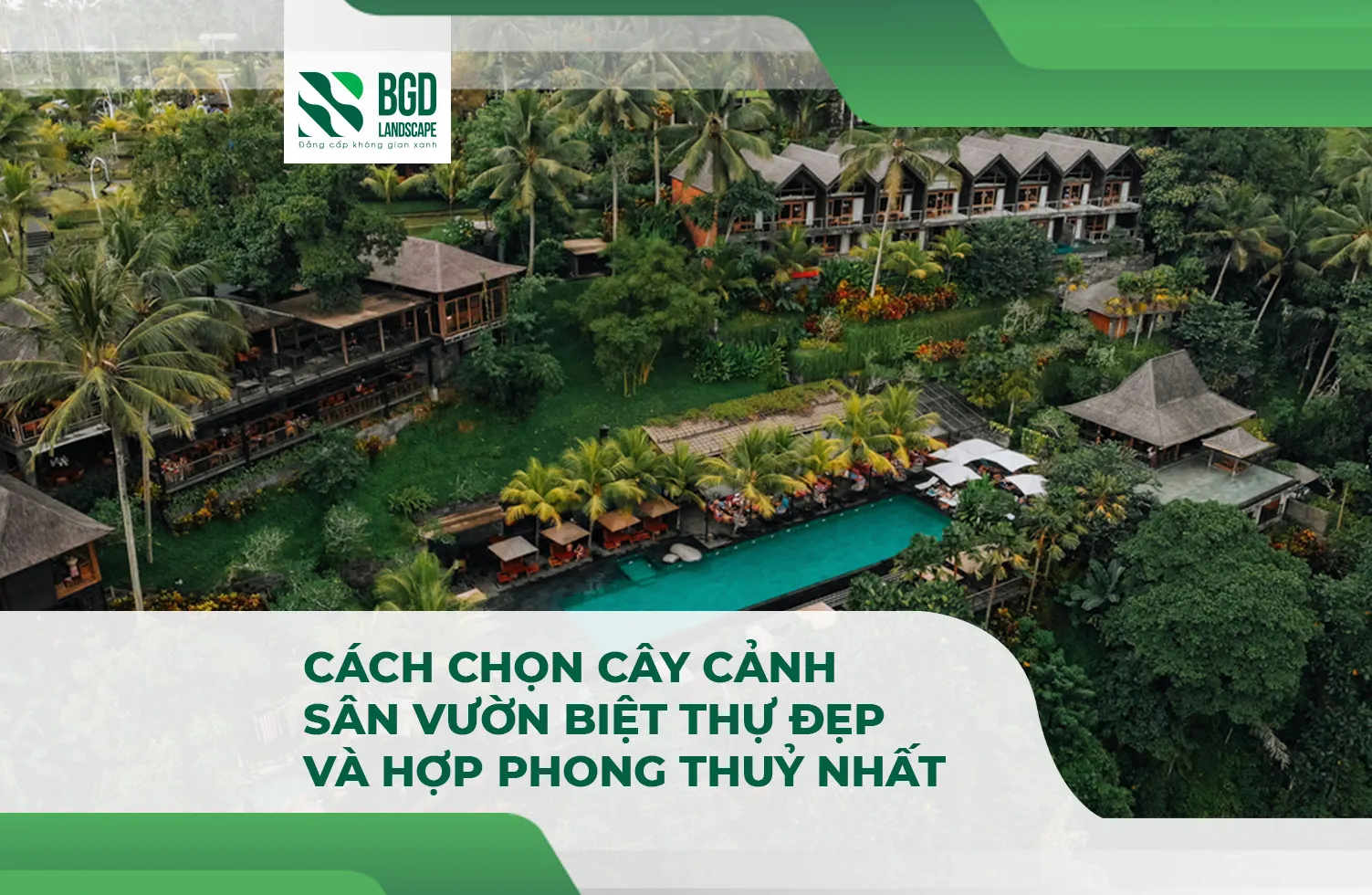

Landscape design for tropical garden becoming one of the trends and truly essential for every home as temperatures and climates are becoming increasingly hot. Just hearing the name brings a feeling of comfort, tranquility, and coolness to those working hard in daily life. There's nothing more special than having a tropical garden (Tropical Garden) right in our homes, which will surely help homeowners cool down upon returning home.
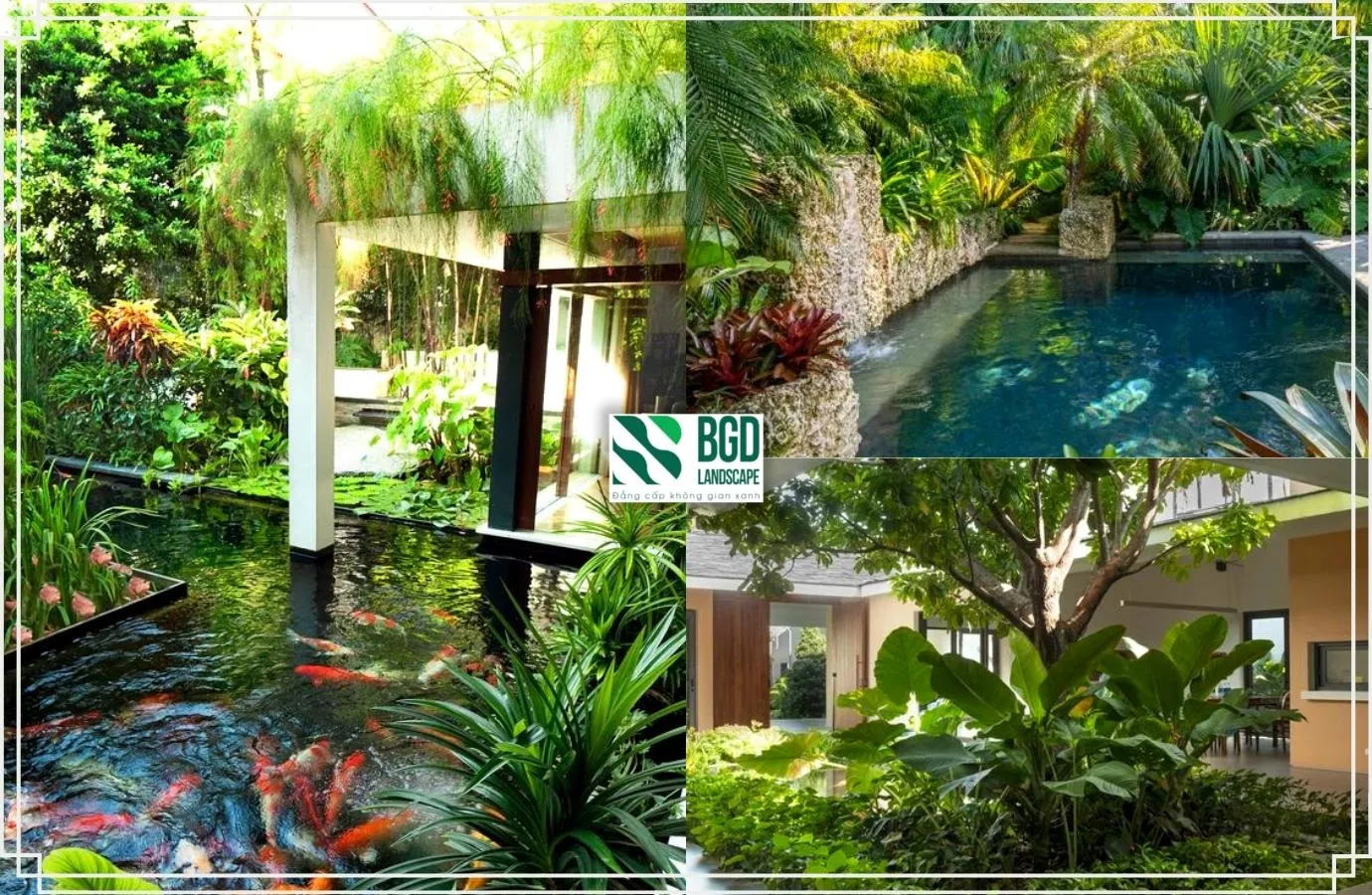
Tropical garden Also known as Tropical Garden It is a type of garden in which tropical plants and plants from tropical countries are planted, featuring an international style but with the conditions of our climate still very suitable for constructing a Tropical garden with a variety of plants. With a tropical monsoon climate like ours, it is completely suitable for building a tropical garden. But it is necessary to pay attention to the following factors for your design to be more complete:
Identify the climate and soil type at the construction site
In tropical garden landscape design, climate and soil are the two most important and critical factors to consider. Vietnam has a climate that is very suitable for this type of garden and tropical plants, but we must not neglect these factors in the construction site because not every tropical plant has the ability to withstand unfavorable weather conditions. Some plants may thrive in hot, humid conditions, However, you cannot withstand the winter climate of Northern Vietnam, so you need to carefully examine each type of plant to see if it is suitable for the climatic changes in the region.
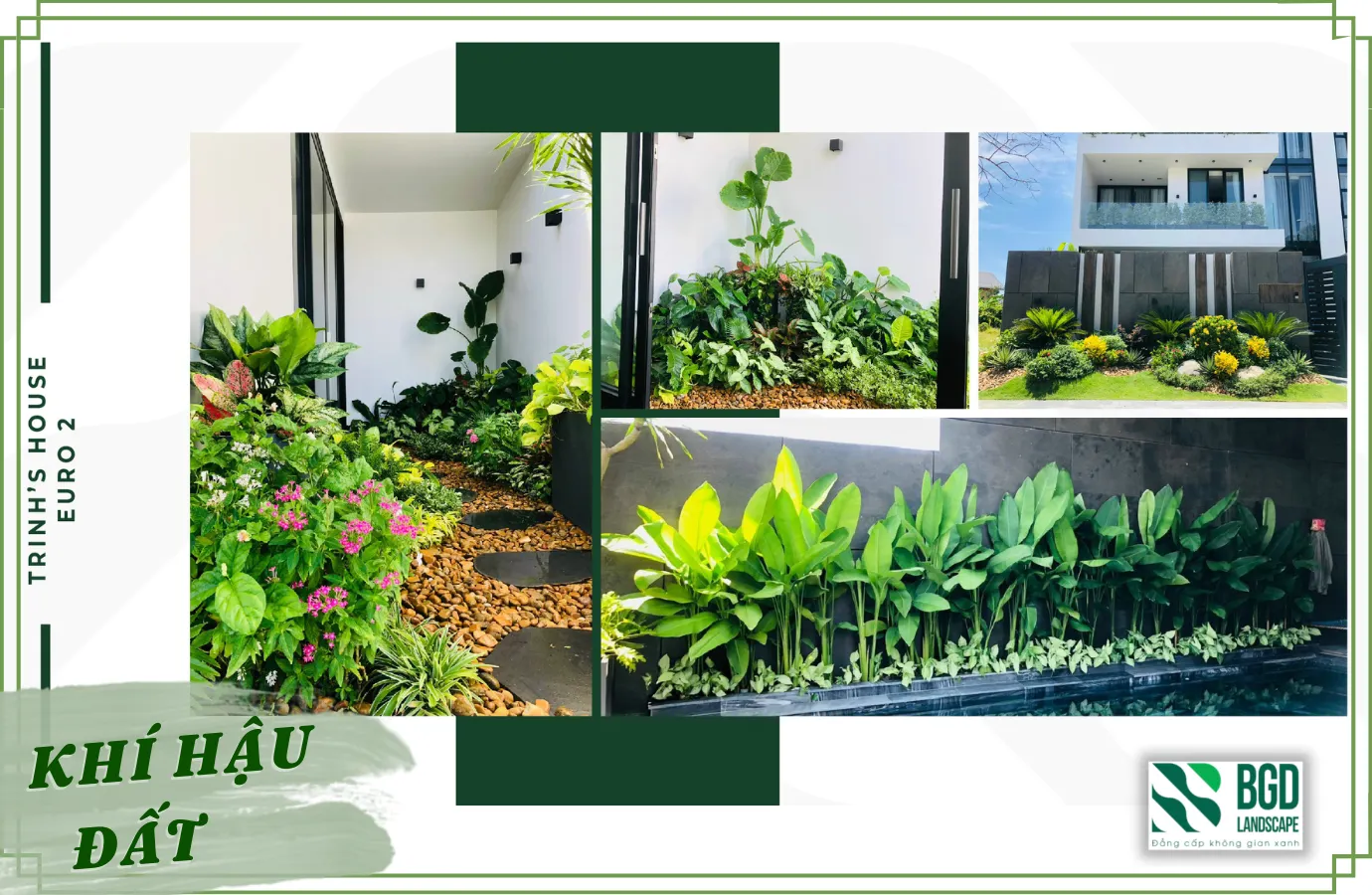
Another important factor is the type of soil. Before planting any plants, please research which type of soil they thrive in and whether it is the soil of the garden you are planning to plant in. Please thoroughly check the soil in the planting area to see if it is contaminated with salt or if the concentration of chemical substances exceeds the standard.
Develop a design for the garden layout – Landscape construction for a Tropical garden –
Before designing you need to observe the overall area of the land visually, then you can use a pen, paper, or design software, or take photos if you are able to sketch a rough outline of the shape of your garden. Pay special attention to analyze the positions and species of plants already present in the garden. If possible, you should not cut them down but instead design by combining additional plants, plants you love, that can grow well under the climate and soil conditions of the area. Garden. You can use large-sized plants or colorful flowers to create focal points for the garden.
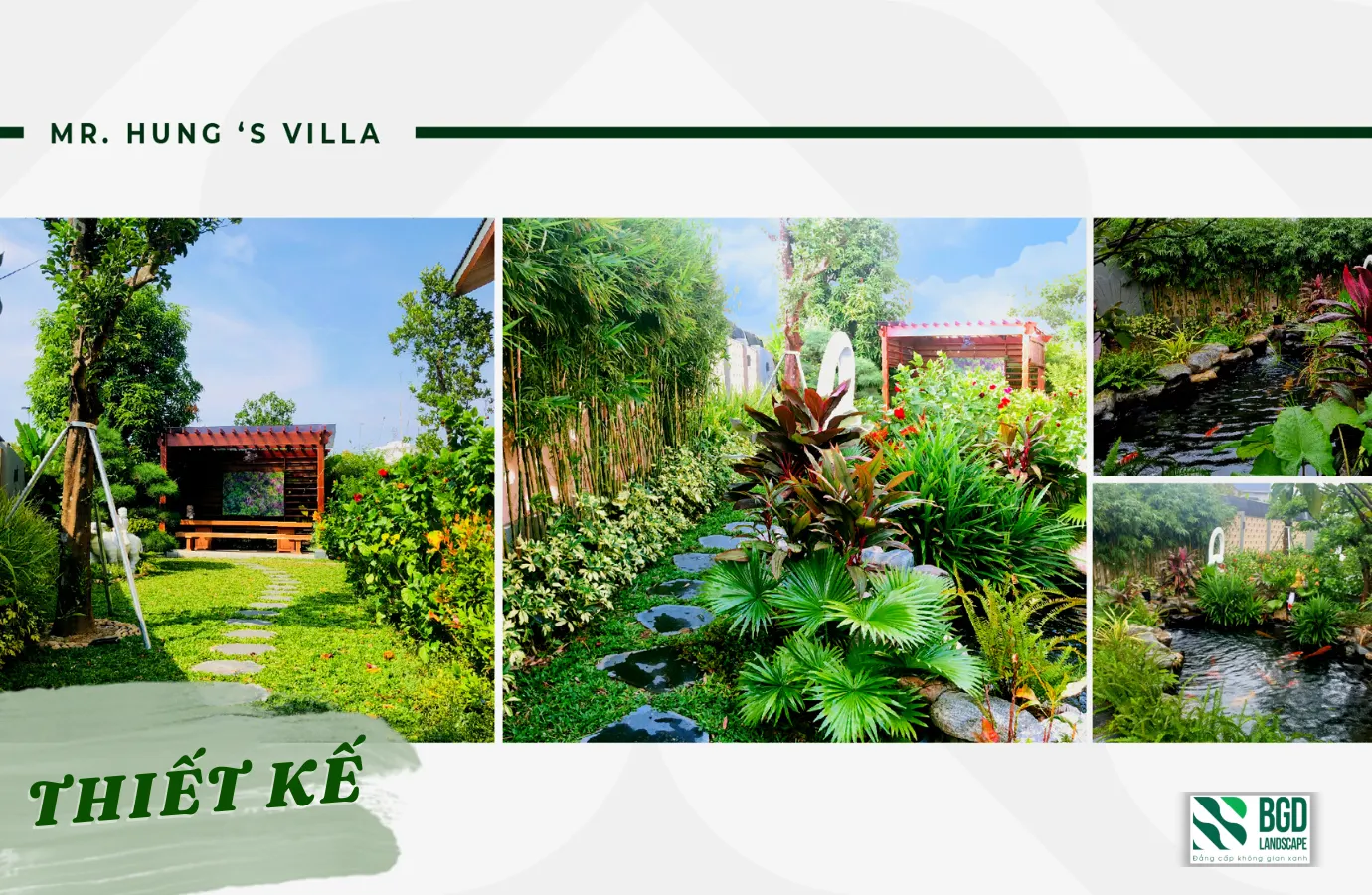
Additionally, you should add some details to the garden such as an outdoor tea table, a swimming pool, or a small path inside the garden. It will surely make the tropical garden landscape of your home more appealing.
Arrange and select plants: shade-loving plants, broad-leaved plants, tropical flowering plants.
Without speaking, you probably understand the importance of this, especially for areas with hot and dry climates. First, it is necessary to determine the location for shade trees that help retain moisture and maintain an appropriate temperature for smaller plants growing beneath them. Additionally, placing shade trees in the right location also helps you shade areas that frequently receive direct, intense sunlight on the house, and you can place a chair or table underneath to enjoy the refreshing feeling below The canopy of these trees.
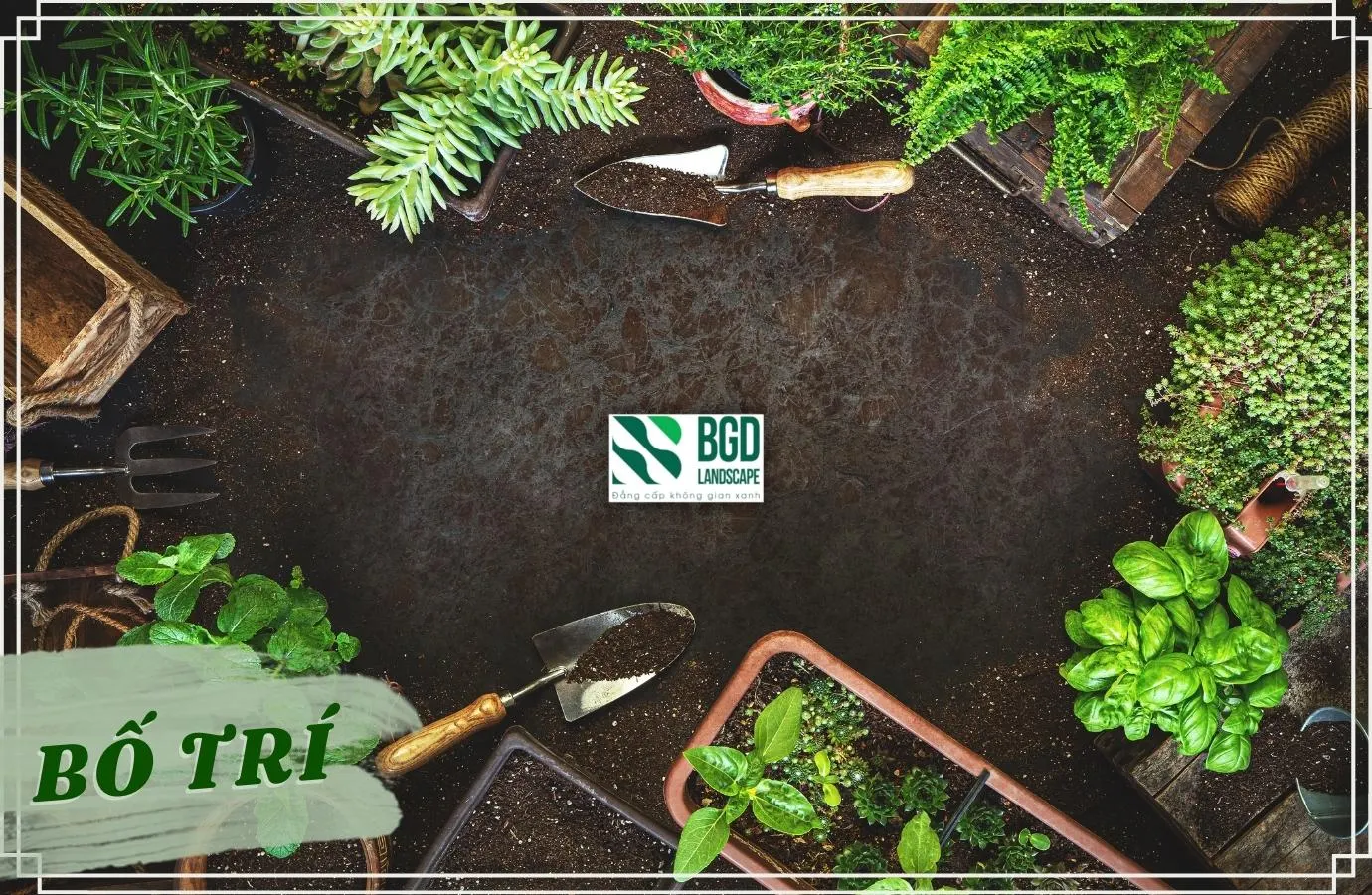
What makes a tropical garden unique is that it's like a miniature rainforest inside your home—let leafy plants flourish in every nook. Enhance this by planting a variety of plants and flowers intermixed to create a dense plant carpet for your home garden. In tropical gardens, plants can grow layered on top of each other, forming multiple layers, and climbing plants can spread wide. The denser the plant density, the more essential it is to create a truly tropical garden.
In addition to small-leaved plants, some varieties of water lilies and banana plants with dense, wide canopies will be an excellent highlight for the garden. This will enhance the tropical feel of the area. Certainly, wide-canopied varieties will make the space more vibrant and full of life.
Add water elements to the garden – Construct Tropical garden landscape
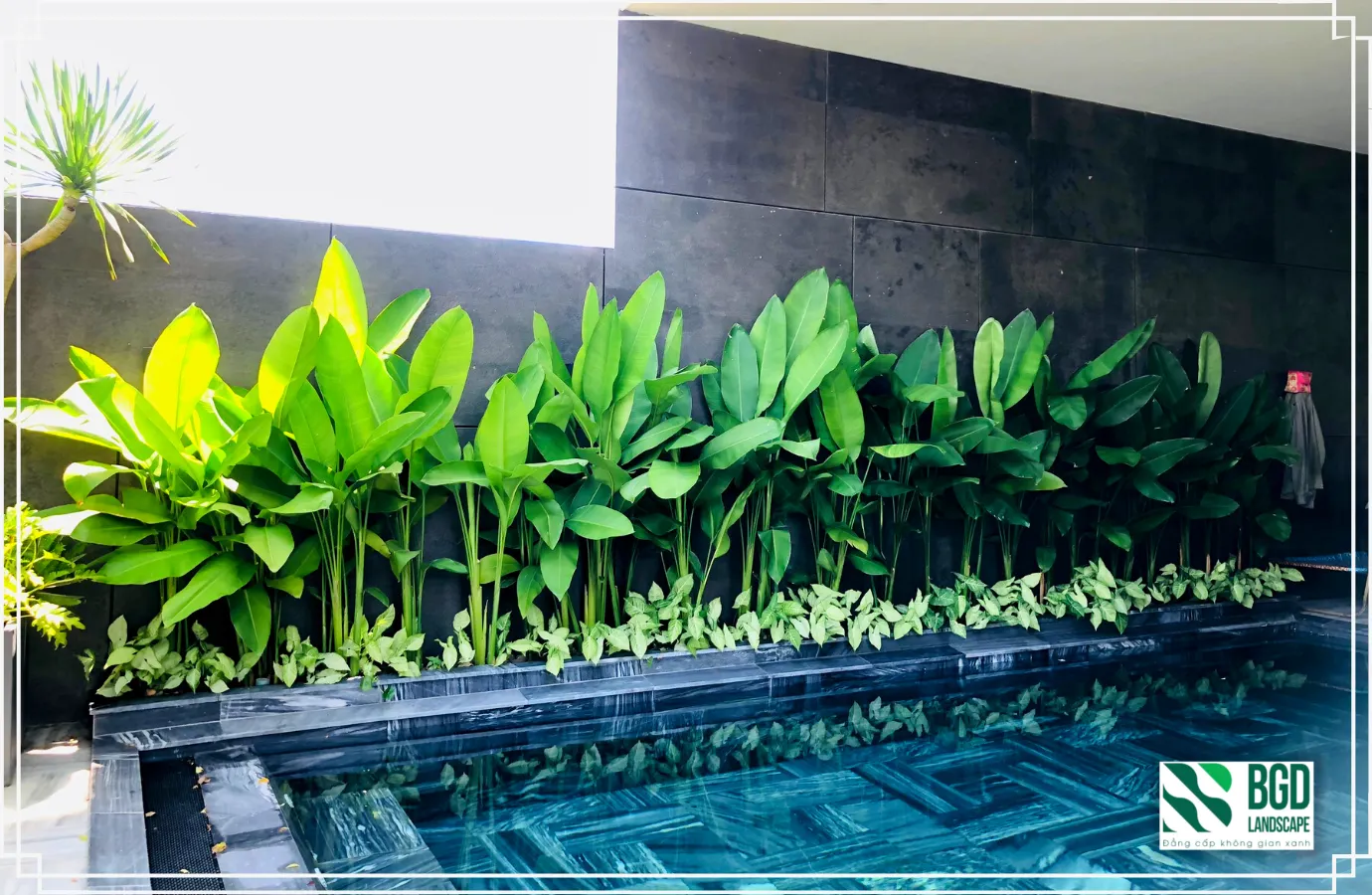
During the landscape design consultation for a Tropical garden, BGD Landscape encourages homeowners with sufficiently spacious properties to allocate a space to incorporate water elements into their garden. A true tropical garden truly requires a moist space with water. This could be a swimming pool, Koi pond, bathtub, or simply a decorative water feature with flowing water over simple stone features. If space is not sufficiently spacious, homeowners can construct a pond, plant clusters of poetic lotus flowers, creating a gentle sound of water flowing will make the garden more distinctive and vibrant.
Add "Tropical materials"
After completing the 4 steps above, you should pay attention to searching for tropical region-specific materials to add to the garden. For example, boulders, sculptures, water jars, etc., to enhance the landscape's distinct tropical character.
Regular maintenance – Landscape design for Tropical gardens
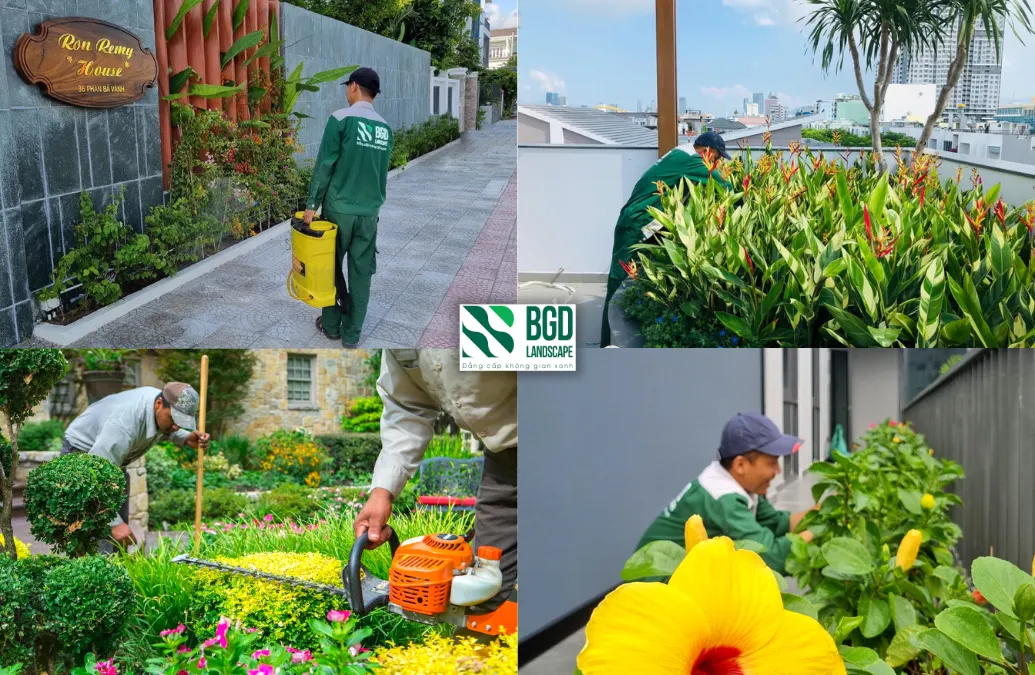
Regular maintenance for tropical gardens is essential – everything needs regular care to survive and maintain its long-term beauty and vitality. Additionally, tending to the garden during leisure time provides relaxation while enhancing its beauty.
The article outlines the steps for constructing a Tropical garden landscape BGD Landscape Based on my experience, I hope this article will provide you with many more ideas for planning to create your dream garden. Additionally, if you are planning to design a tropical garden landscape, please contact us immediately through official communication channels for detailed consultation!