A. Filtration method and function:
- Rough filter (rough filtering): The first filter from the fish tank to the filter pond, containing a coarse filter brush and the task of rough filtering (fish waste, debris, leaves...), 90% of the waste from the fish tank to the rough filter will be retained here.
- Biological Filter (Fine Filter): Following the Settling Filter, this contains Jmart (possibly Kanet or Bio Chip), which is a biological filter for water treatment, decomposing suspended solids, urine, mucus, and harmful gases…
- Pump Block: Contains UV light for algae control and includes the corresponding pump to return water from the Filtration Pond to the Breeding Pond
- Filtration pump: Is a pump to discharge waste from sedimentation tanks (or intermediate tanks) outside.
- Oxygen generator: Is an essential device for cultivating microorganisms and supplying oxygen to fish tanks.
- The filtration system will operate continuously 24/24 to treat water, calculated from the beginning for filtration capacity and operating time, and hobbyists do not need to intervene frequently.
- Central electrical switchboard with individual device control switches
- Depending on the number of fish in the pond, periodically 1-6 months/time the pond will block water from the main pond into the koi pond, remove waste water and sediment
- Oxygen machines must run continuously 24/24
- Recommended stocking density: 2 kg fish/m³ (equivalent to 50cm fish size)
- Fish should not be stocked frequently; before each stocking, stop feeding in the main pond for 48 hours, fish must be bathed in potassium permanganate, disinfected, and only allowed to eat in the pond after 48 hours of stocking; salt concentration should be increased to 3kg/m³ of water after stocking
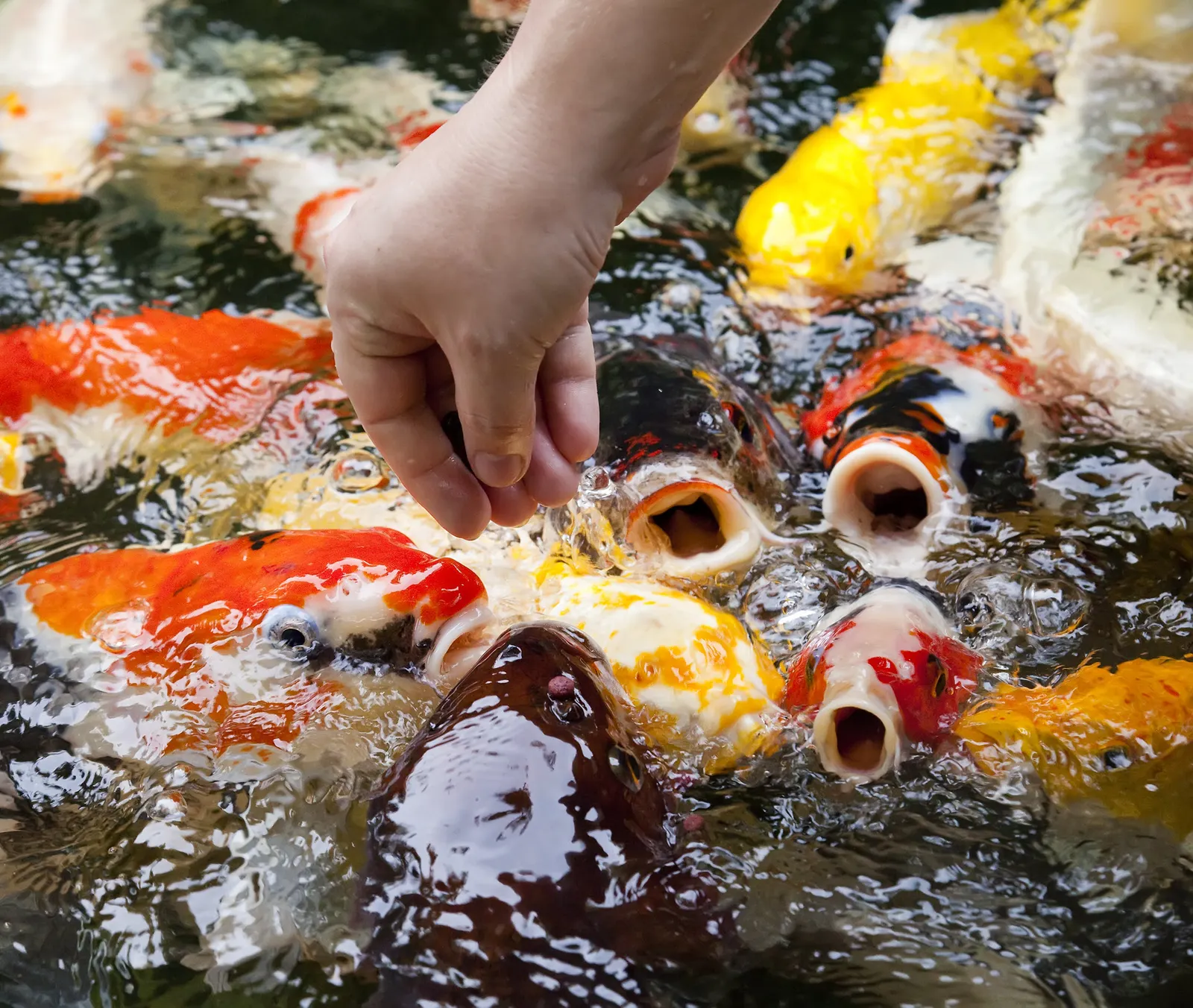
- Feeding time can be divided into 2 times a day, total daily intake should be 3% of the fish mass in the pond
- Stop feeding
- Change 20% of water daily
- Add salt at 3% (when indicated)
- Feed again when fish are active normally and at least 4 days after the first rain
- Turn on pump
- Water level drops
- Oxygen depletion
- The pond suddenly becomes murky or changes color
- Fish show signs of not eating and are lethargic, lying at the bottom